
CONTACT: press@M4BL.org
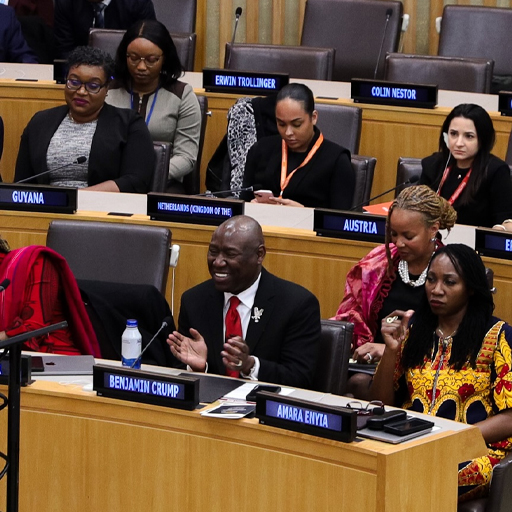
“Yesterday, the United Nations adopted a resolution proposed by Ghana recognizing the TransAtlantic Slave Trade as the gravest crime against humanity. On Monday, our Co-Executive Director, Dr. Amara Enyia, gave remarks at the UN in support of this resolution, stating ‘Our entire economic system and its institutions and structures are fundamentally flawed because their very design required the exploitation, the trafficking of our people…that design persists because the world has not yet confronted it, eradicated it, and built something new.’
The resolution calls for reparations and recognizes the lasting and present-day consequences of the trafficking and enslavement of African people. This is a major advancement and builds on a legacy of persistent advocacy for reparatory justice at the local, national, and international levels. Since its founding, the Movement for Black Lives has been committed to advancing reparations. We recognize this moment as one that not only paves the way for a reparative framework but also heightens the urgency and calls for bolder action to advance reparations at the national and international levels. We extend our gratitude to the President of Ghana for his visionary work as a champion for reparations on the continent, along with the African Union’s declaration of 2026-2036 as the Decade for Reparations.
The United States, Israel, and Argentina have demonstrated that they are out of step with the rest of the world in their refusal to recognize the importance of this resolution and reparations generally. Their “no” votes will not serve the interests of humanity and only further isolate them as they remain in opposition to the justice that the rest of the world is demanding.
The Movement for Black Lives will continue to deepen our work within the U.S. and with our comrades around the world in the fight for the reparations and the fundamental systems change that our people demand. In the face of bold far-right authoritarianism here and abroad, commitment to the vision and guiding principles of reparations will lead us toward the future we deserve, a future that is built on prioritizing care and the humanity of all people.”
Dr. Amara Enyia, Co-Executive, Movement for Black Lives
The Movement for Black Lives is a national ecosystem of more than 100 leaders and organizations creating a broad political home for Black people to learn, organize, and take action. M4BL includes activists, organizers, academics, lawyers, educators, health workers, artists, and more, all unified in a radical vision for Black liberation and working for equity, justice, and healing.